
Set within Toronto’s Junction neighbourhood, 2760 Dundas Street West transforms a vacant site into a six-storey mid-rise building that seeks to redefine the “missing middle” typology. The project combines traditional wood-frame construction with advanced prefabrication techniques, delivering 33 rental homes—including affordable units—together with an at-grade retail space.
Set within a mid-block condition, the site offers a slender frontage of just under 16m along the north side of Dundas Street West. Once home to the Peacock Hotel (1890–2019), the site carried with it a century of architectural memory. The new design acknowledges this legacy through a nuanced expression of brickwork that pays homage to the Junction’s enduring masonry traditions, while introducing a forward-looking architectural language.
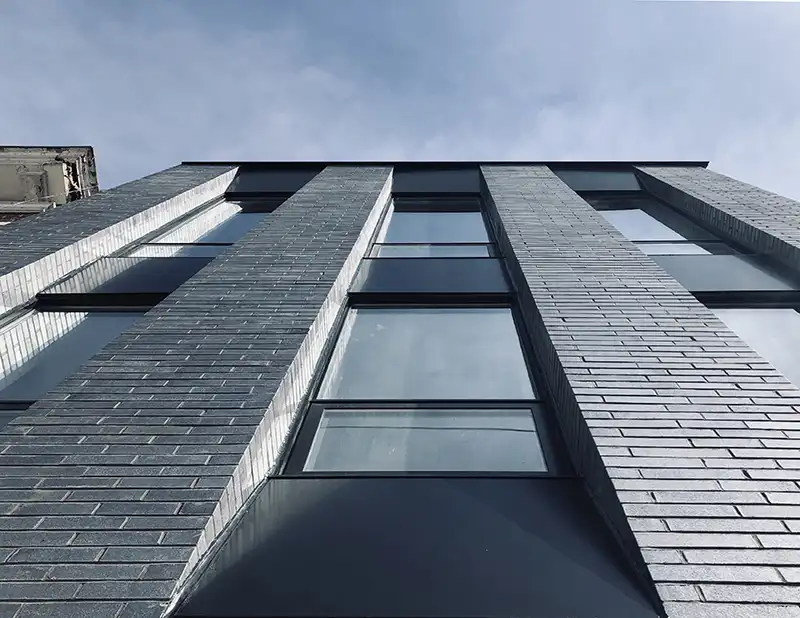
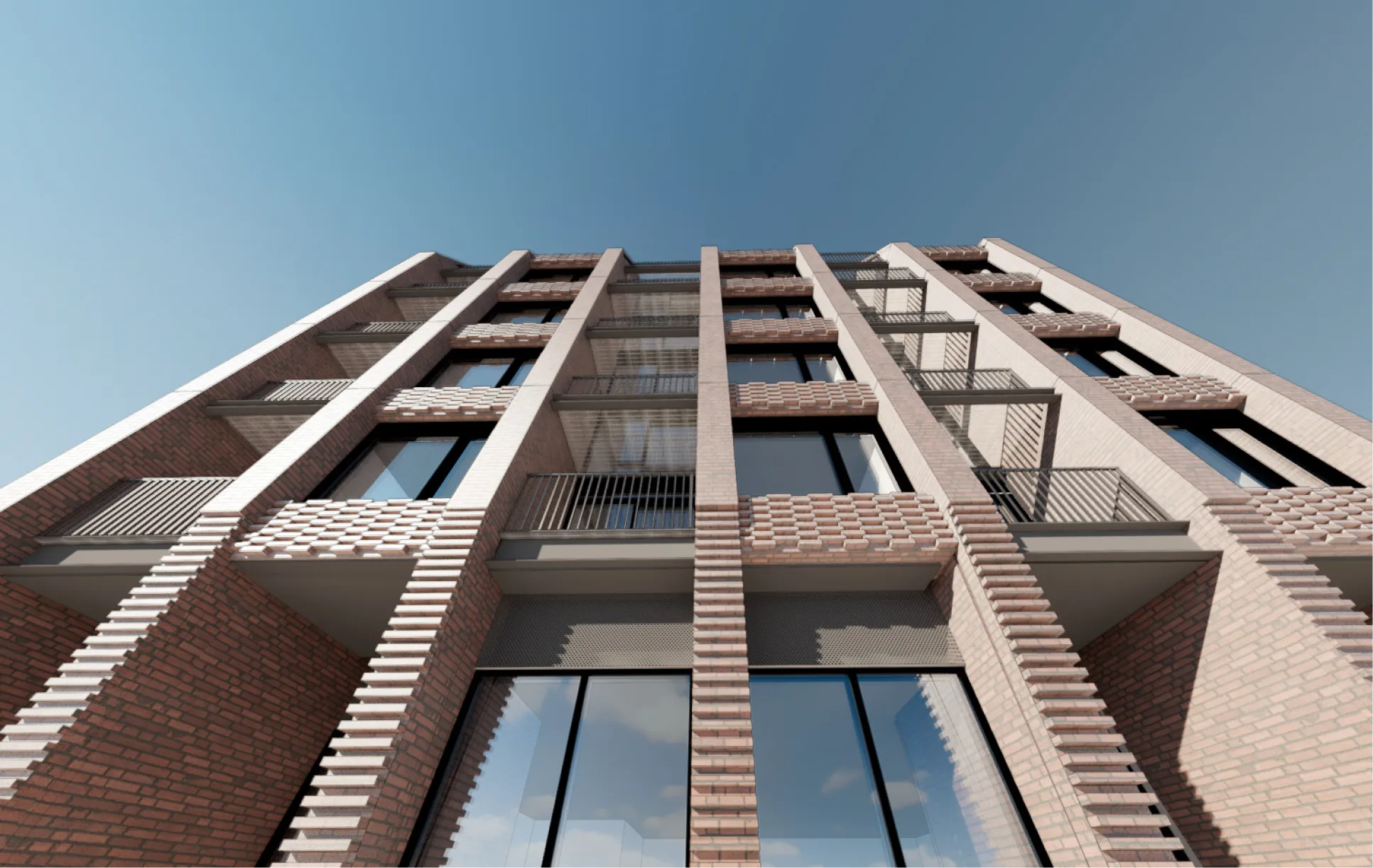
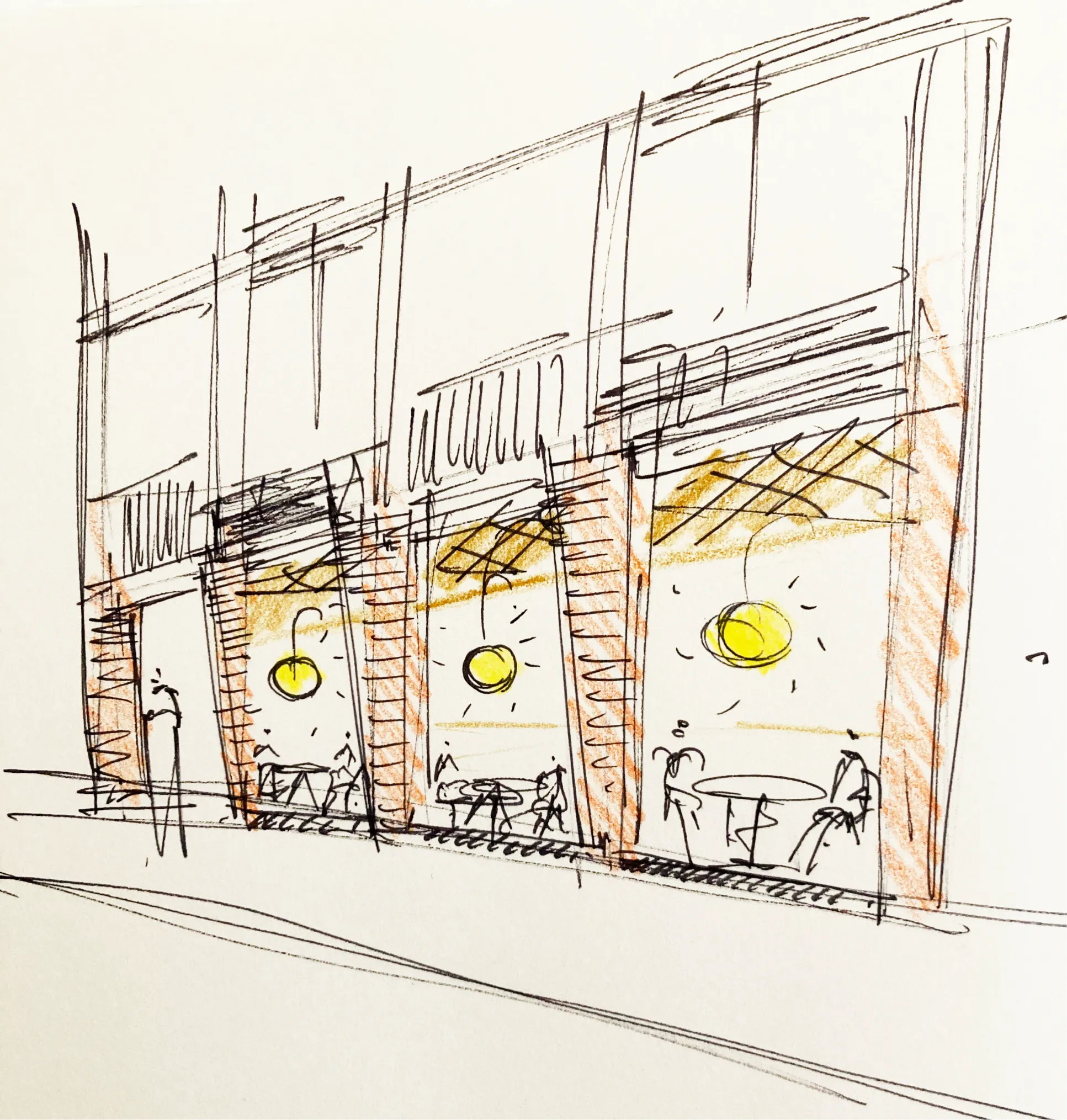
The building’s primary elevation is animated through three distinct brick configurations, creating a rich dialogue of colour, texture, and shadow. At grade, five columns of corbelled red brick define the retail frontage. Above, traditional brick coursing carries the vertical structure upwards to frame an alternating sequence of balconies and punched windows. Interwoven with this, red brick in a hit-and-miss pattern frames each unit window. Together, these strategies create a layered composition that resonates with the neighbourhood’s material heritage.
At the sixth storey, the massing recedes through a dormer that breaks down the scale of the streetwall and creates a more intimate relationship with the neighbourhood’s low-rise context. The angled cutbacks not only reduce perceived height but also generate functional enclosed balconies. This gesture is mirrored on the building’s rear elevation, reinforcing a balanced approach to both the main street frontage and the laneway.
The structure pushes the limits of standard light wood-frame construction, minimizing reliance on structural steel and concrete. Unlike most mid-rise buildings in the city, both stair and elevator cores are built entirely of wood. Balconies are conceived as hyper-thin, almost transparent platforms, lightly tethered to the main structure. Interiors are designed to maximize natural light across living spaces and bedrooms. A mix of unit types and sizes—including ground-floor units facing the laneway—contribute to a more active, pedestrian-oriented laneway, complemented by a shared amenity space.
Beyond delivering new housing, the project restores vitality to a prominent site scarred by fire and demolition. By weaving innovation with contextual sensitivity, 2760 Dundas Street West re-establishes the street edge, contributes to retail activation, and strengthens the Junction’s identity as a neighbourhood where history and modernity are held in balance.